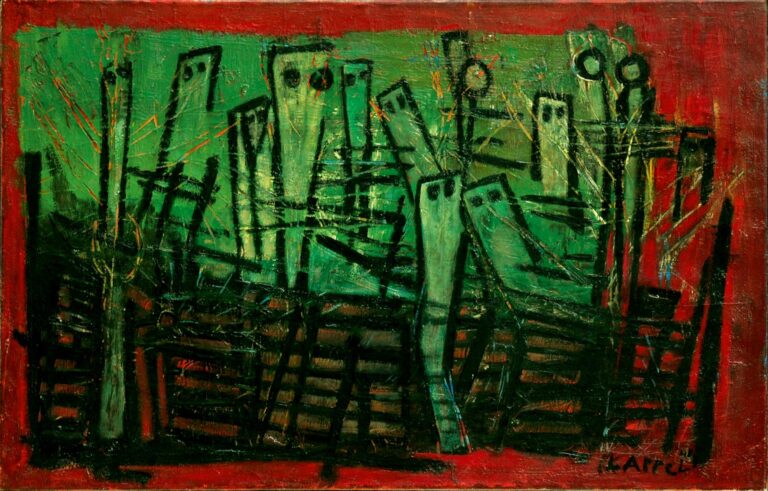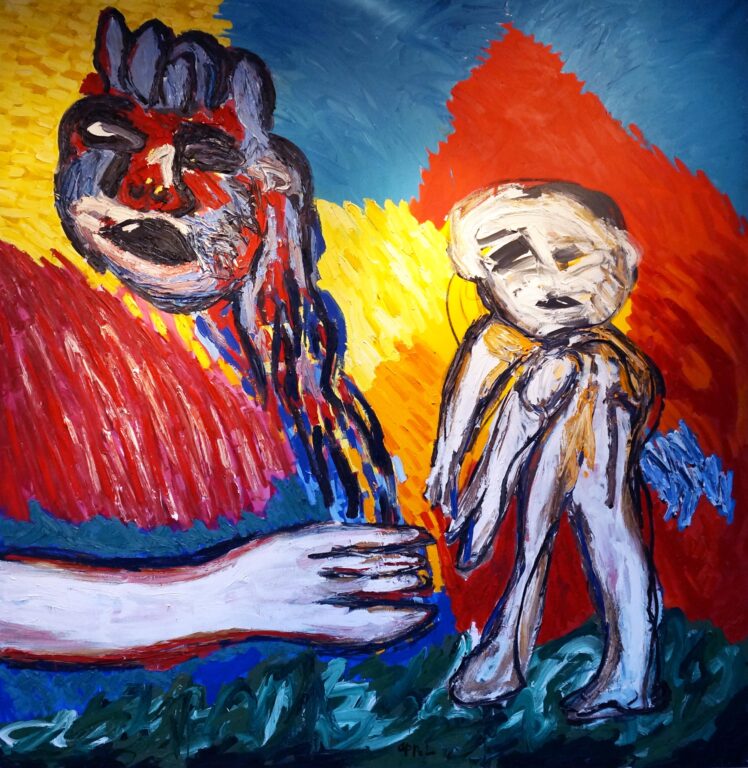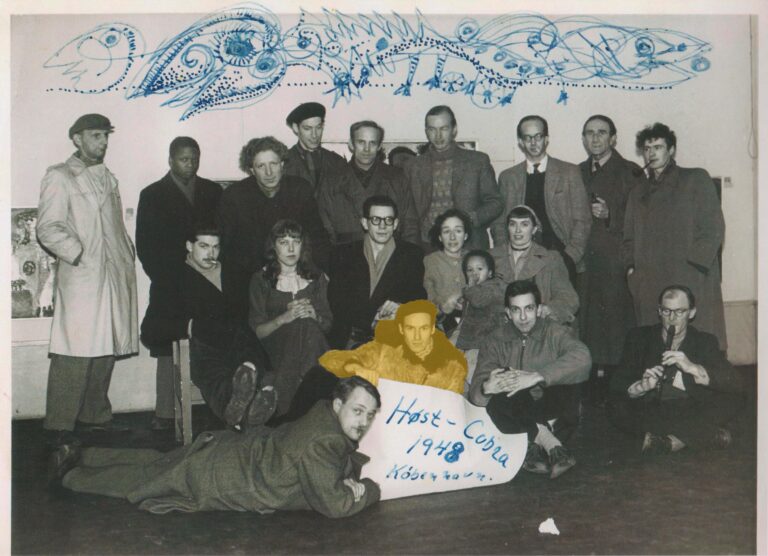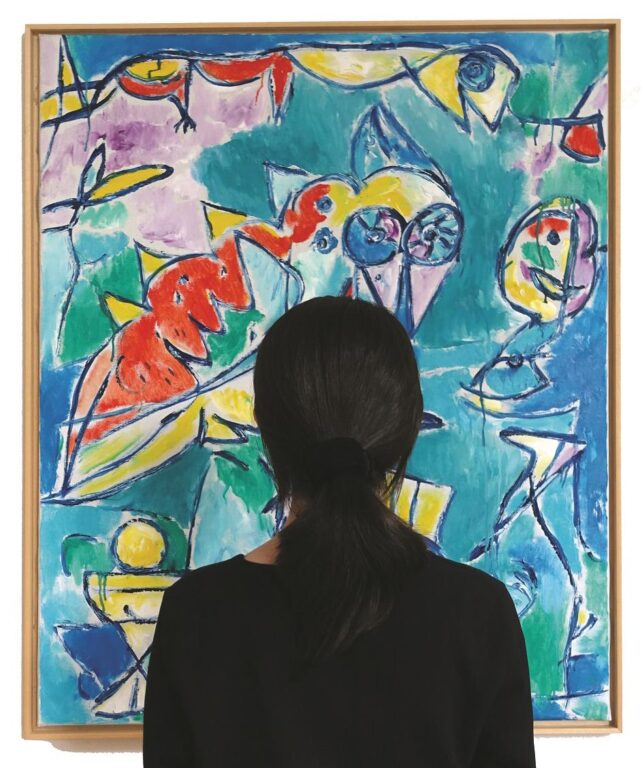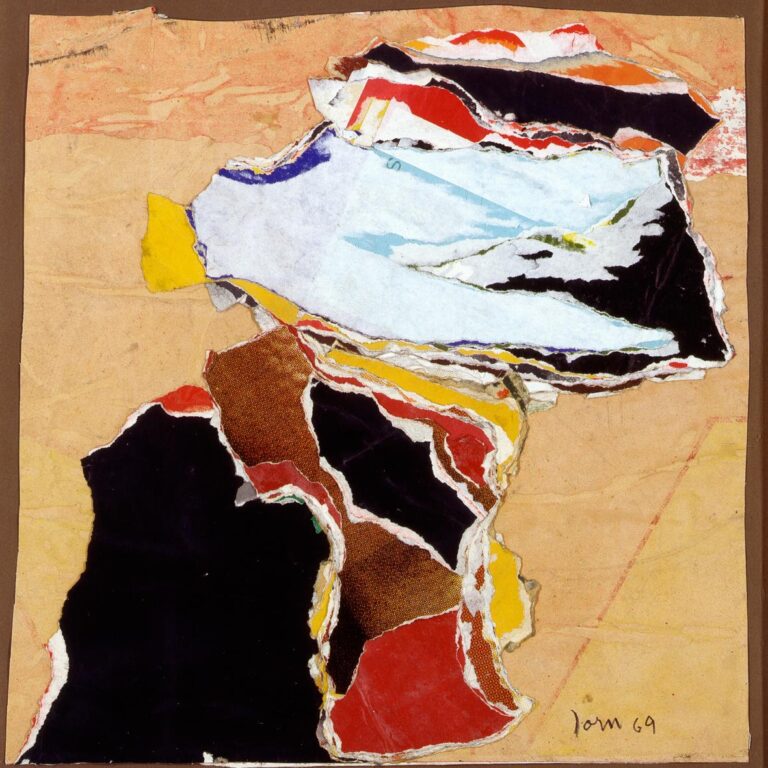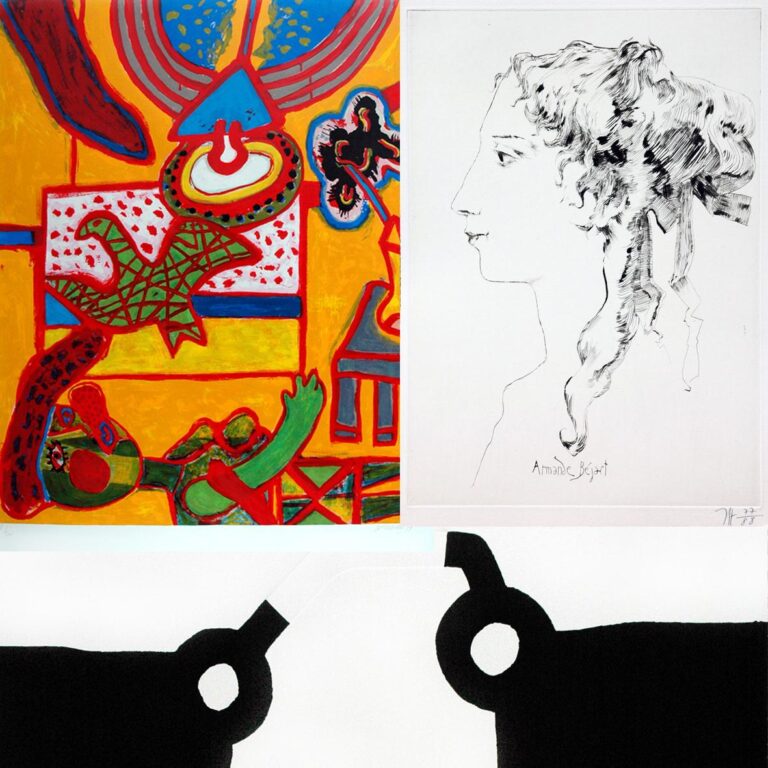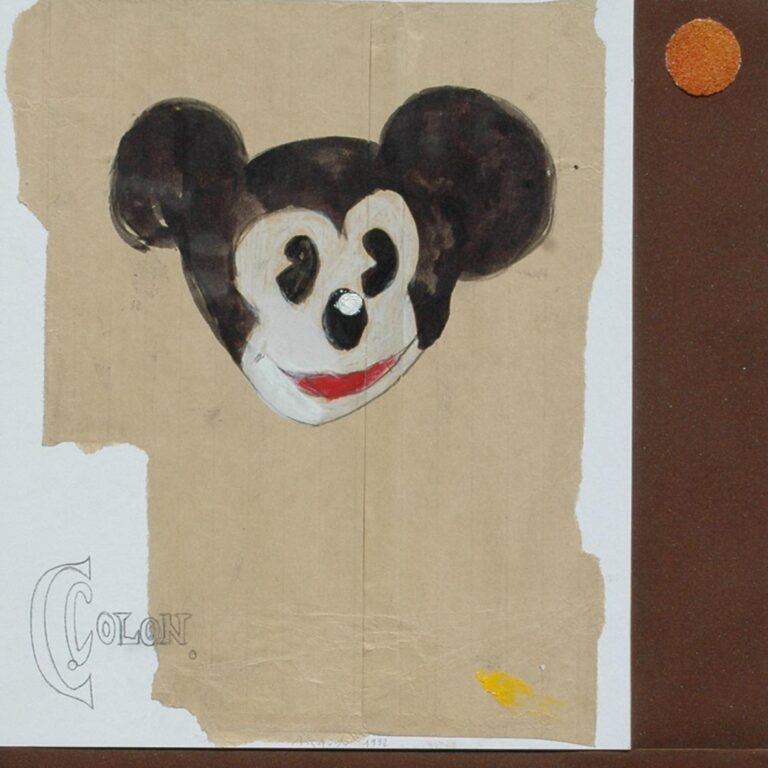
Karel Appel was a Dutch painter, sculptor, and poet, and one of the founders of the CoBrA group (1948–1951), an avant-garde movement that celebrated spontaneity, color, and freedom of expression. His art, characterized by dynamic gestures and bright colors, reflects an instinctive and primal approach to painting, inspired by children’s and folk art. Appel was internationally active, exhibiting in museums and galleries worldwide, and established himself as one of the most important figures of post-war European expressionism.
1921: Karel Appel is born in Amsterdam on 25 April.
1940-43: Studies at State Academy of Fine Arts in Amsterdam, where he meets the Belgium artist Corneille.
1948: Founds the Nederlandse Experimetele Groep (“Dutch Group for Experimental Art “) with Corneille and Constant, from which the art group CoBrA grows within the same year.
1949: First public commission for a mural in the City Hall of Amsterdam. The final piece causes public protests and has to be covered.
1951: Moves to Paris.
1954: Designs stain-glass windows for churches in Geleen and Zaandam and a wall painting for the UNESCO building in Paris, for which he receives an award at the Venice Biennal.
1960: Awarded the Guggenheim Prize.
As of 1960: Turns away from figurative representation as he increasingly focuses on abstract expressionism.
As of 1994/95: Works primarily in stage design at the Dutch Opera. In 1994 he does the design for the stage sets of the opera Noach, and in 1995 he does the art design of Mozart’s The Magic Flute.
1995: Moves to New York and Zurich.
2006: Karel Appel dies on 3 May in Zurich.
Site managed with ARTBUTLER