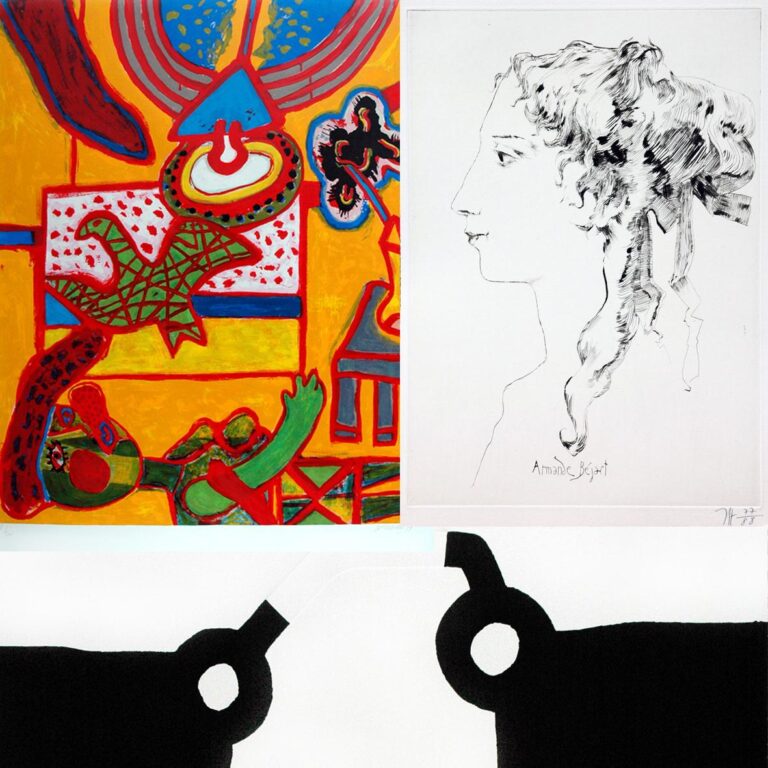
Danish painter Asger Jorn was one of the founding members of the CoBrA group, along with Dutch artists Karel Appel, Corneille, and Constant. Alongside his artistic work, he was also active as an art theorist and published articles for the magazine “Helhesten” as well as numerous issues of the CoBrA magazine.
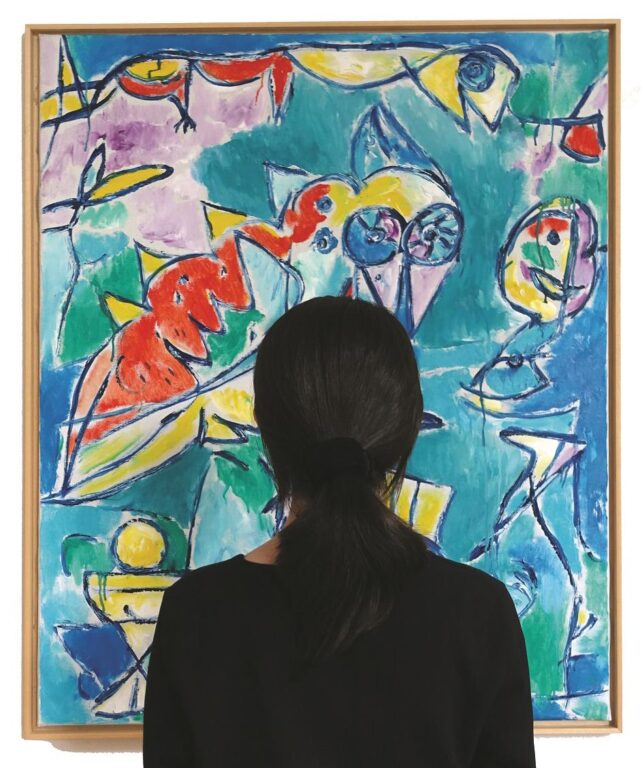
Jorn’s painting is characterized by an expressive, dynamic brushstroke. As with many CoBrA artists, his work oscillates between abstraction and figuration. While individual formal elements are still recognizable in the 1940s, his painting style became increasingly gestural and fluid from the early 1950s onwards.
1914: Born as Asger Oluf Jørgensen on 3 March 1914 in Vejrum, Jutland (Denmark).
1936: Moves to Paris and attends Fernand Léger’s Académie Contemporaine.
1937: Contracted by Le Corbusier, he designs large-format decorations for the Pavillon des Temps Nouveauxat the Paris World’s Fair.
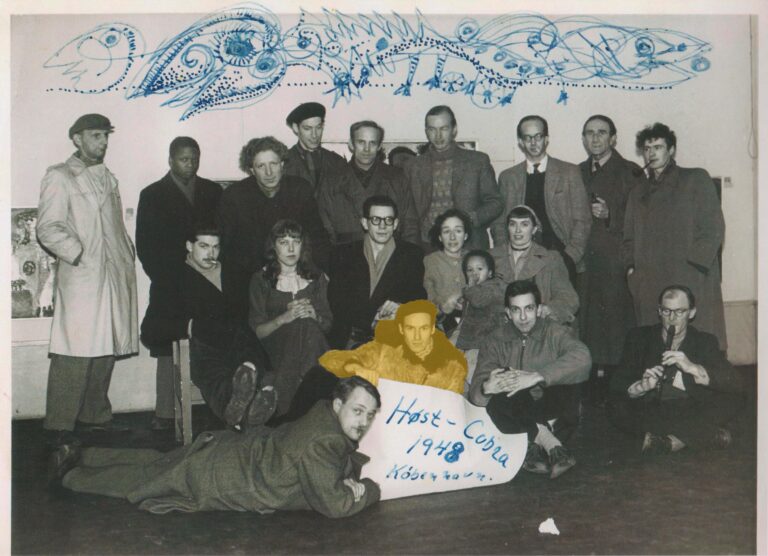
1948: Founds the art group CoBrA along with Karel Appel, Corneille, Christian Dotremont and Joseph Noiret.
1949: Participates in the first CoBrA exhibition at the Stedelijk Museum in Amsterdam. Resides in Switzerland.
As of 1954: Asger Jorn achieves his international breakthrough as an artist.
1954-58: Cofounder of the Mouvement International pour un Bauhaus Imaginiste (“International Movement for an Imaginist Bauhaus”).
As of 1955: Homes in Paris and Albisola.
1957-61: Crucial member of the art group Situationistische Internationale (S.I.).
1961: Leaves the S.I. to found the Institute for Comparative Vandalism.
As of 1960 Jorn paints over oil painting and prints from department stores and salon paintings of the 19th century. He describes his new work as “défigurations” or “modifications“.
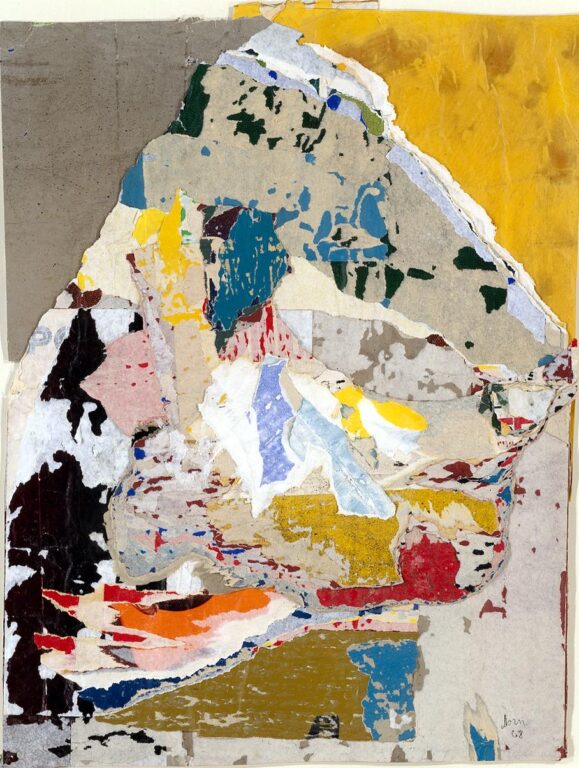
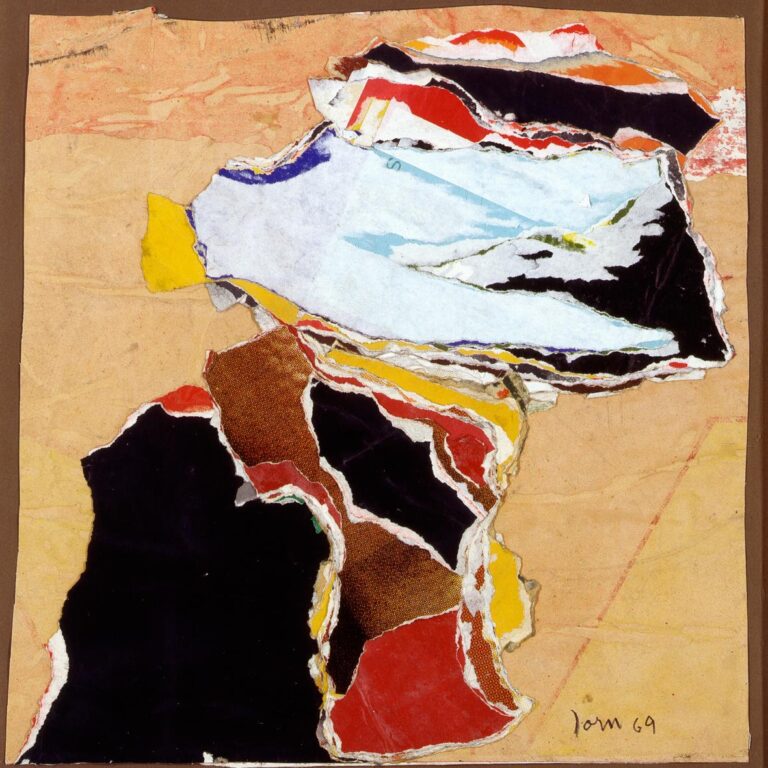
1964: Creates décollages and ripped-paper pieces made of re-glued paper. Is awarded and rejects the Guggenheim Prize.
As of 1970: His primary focus moves from painting to sculpture.
1973: Dies on 1 May in Aarhus, Jutland (Denmark).
Site managed with ARTBUTLER