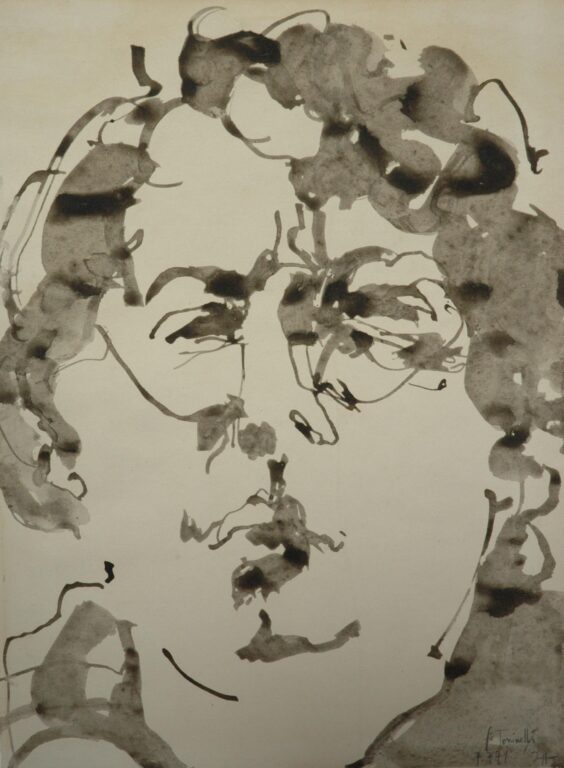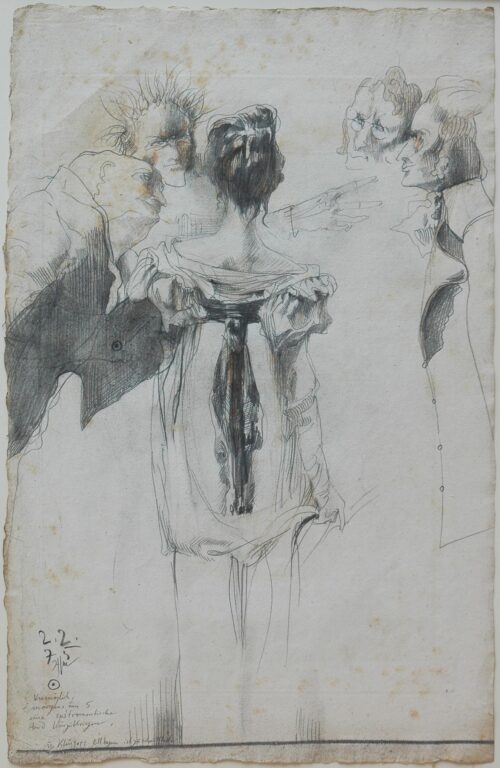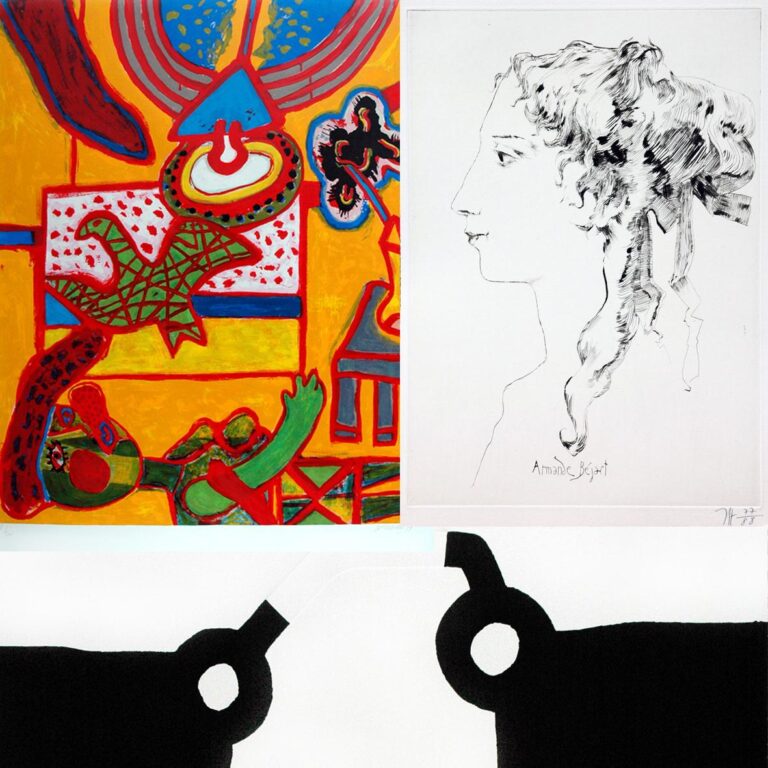
Horst Janssen (1929–1995) was one of the most influential German graphic artists and illustrators of the 20th century. After studying at the University of Fine Arts in Hamburg, he developed a distinctive, masterful style combining etching, lithography, and drawing.
His work focuses on self-portraits, portraits, still lifes, and landscapes characterized by subtle irony, melancholy, and existential reflection. Janssen combined technical mastery with intellectual acuity, creating an extensive and personal oeuvre that fundamentally transformed printmaking in Germany.
1929: Janssen is born on 14 November in Hamburg. He grows up as the only child of Martha Janssen, a seamstress, and is raised by his grandparents in Oldenburg.
1942-1945: Pupil at the National Political Education Institute (Napola) in Haselünne, Emsland.
1945: After the war, he is taken in by his aunt Anna in bombed-out Hamburg.
1946-1951: Studies art under Alfred Mahlau at the Landeskunstschule Hamburg.
1952: Lichtwark Scholarship.
1955: Birth of daughter Katrin, known as Lamme.
1957/58: First successes with colour woodcuts and large-format etchings.
1959: Pioneer, alongside Paul Wunderlich, of New Figuration.
1961: Birth of son Philip.
1968: Honoured for his fine-line drawings with the Graphic Arts Prize at the Venice Biennale.
1969: Friendship with collector Gerhard Schack, printer Hartmut Frielinghaus and Joachim Fest.
1970s: Departure from the avant-garde. Drawings based on nature and the great masters of the past.
1975: Schiller Prize of the City of Mannheim.
1980s: Work as a writer.
1987/1989: Two-volume autobiography is written.
1990: After falling from his balcony, he burns himself with acid and is temporarily blinded by corneal inflammation. Afterwards, he creates light-filled watercolours and sombre landscapes.
1992: Honorary citizen of the city of Oldenburg.
On 31 August 1995, Janssen died in Hamburg as a result of a stroke.
2000: Opening of the Horst Janssen Museum in Oldenburg.
Site managed with ARTBUTLER