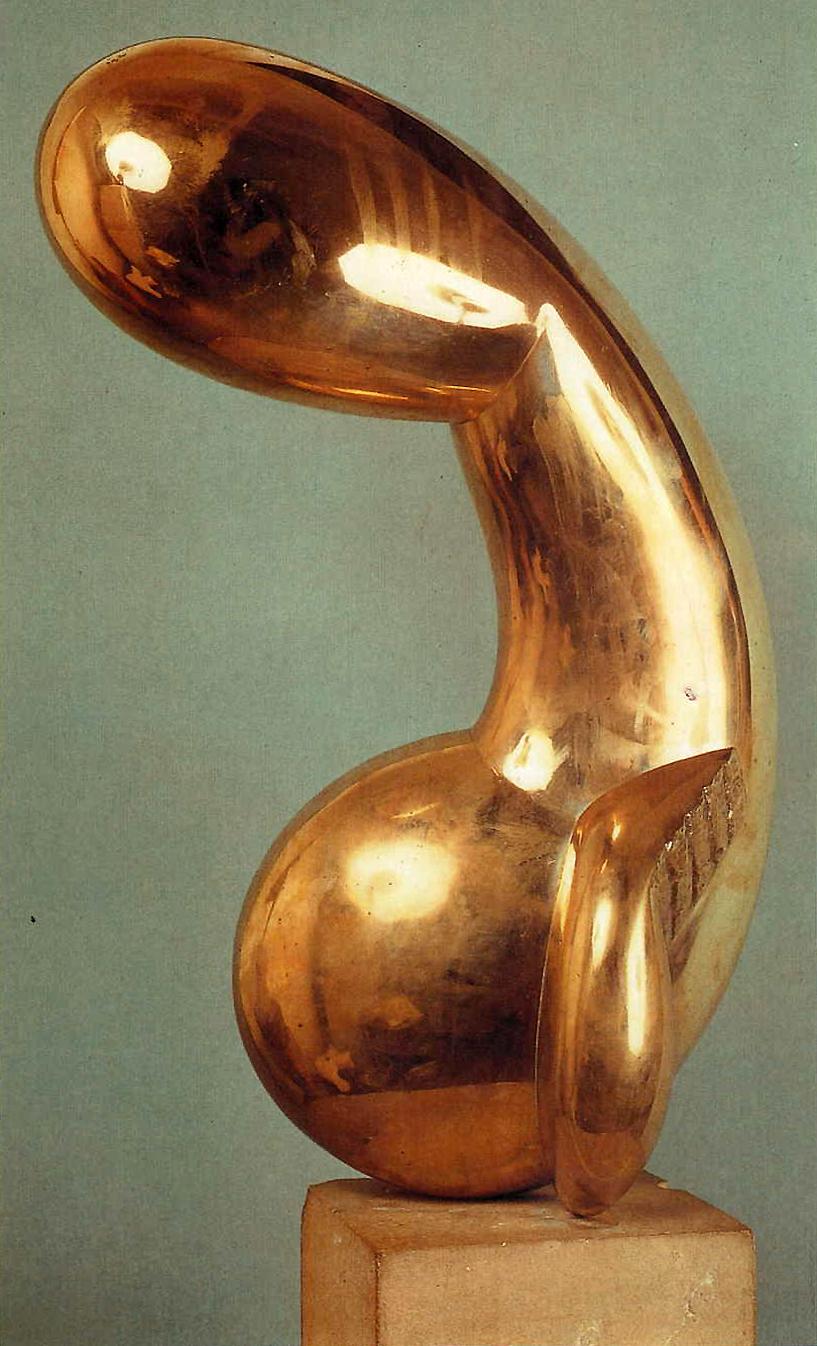
Princess X - Constantin Brâncuşi
Provenienz · Provenance:
Théodor Nicol (Neffe von Natalia Dumitresco und Rechtsnachfolger der Brancusi-Erben Alexandre Istrati und Natalia Dumitresco · nephew of Natalia Dumitresco and legal successor of Brancusi‘s heirs Alexandre Istrati und Natalia Dumitresco)
Privatsammlung Monaco · Private collection, Monaco
Guss · Cast:
Susse Fondeur, Arcueil, France, 2002 (Bestätigung vom 8. Oktober 2010 durch Hubert Lacroix, President · Confirmation from October 8, 2010 by Hubert Lacroix, President)


Zertifikat · Certificat:
Ein Zertifikat des Brancusi Estate ist verfügbar. · A certificate executed by the Brancusi Estate is available.


Ausstellungen früherer Güsse (Auswahl) · Exhibitions of earlier casts (Selection):
Society of Independent Artists, New York City, 10. April – 6. Mai 1917 · April 10 – May 6, 1917
An Exhibition of Sculpture by Brancusi, Arts Club of Chicago, Chicago, IL, 1927
Constantin Brancusi, Solomon R. Guggenheim Museum, New York City, 1955
Constantin Brancusi, Philadelphia Museum of Art, Philadelphia, PA, 1956


Bibliographie · Literature:
Pontus Hulten, Alexandre Istrati, Natalia Dumitresco: Brancusi, Werkverzeichnis, Stuttgart 1986, S. · P. 107, 130-132, 290, Nr. ·No. 89 (Abb. anderer Guss und Marmor · rep. other cast and marble).
Philip McCouat, The Controversies of Constantin Brancusi. Princess X and the Boundaries of Art, in: Journal of Art in Socienty, 2015, http://www.artinsociety.com/the-controversies-of-constantin-brancusi-princess-x-and-the-boundaries-of-art.html.
Bencodydoyle, Word: Constantin Brancusi, ‚Princess X‘, in: https://bencodydoyle.wordpress.com/2014/07/30/word-constantin-brancusi-princess-x/.
Wikipedia: https://en.wikipedia.org/wiki/Princess_X


Einführung · Introduction:
Skandalträchtiges Schlüsselwerk des rumänischen Bildhauers Constantin Brancusi (1876-1957) mit internationaler Beachtung, da es 1920 aus dem Salon des Indépendents in Paris entfernt wurde. Entgegen dem ersten Anschein eines erigierten Phallus und nach der festen Überzeugung des Künstlers basiert die Skulptur auf Brancusis Darstellung der französischen Prinzessin Marie Bonaparte, der Urgroßnichte Napoleons. In einer Serie von Studien suchte der Künstler in ihrem Porträt eine Idealform weiblicher Schönheit und Versunkenheit zu finden, deren Kulminationspunkt die 1915-16 entstandene Bronze markiert.
Scandalous crucial sculpture by the Romanian sculptor Constantin Brancusi (1876-1957) causing international attention when it was eliminated from the Salon des Indépendents in Paris. Contrary to the first sight of an erected penis and according to the deep conviction of the artist, the sculpture grounds on a description of Princess Marie Bonaparte, grand grandniece of Napoleon. In a series of studies, the artist tried to find the perfect impression for female beauty and absorption which found its climax in Princess X, created in 1915-16.


Werkzusammenhang · Context:
Die 1915-1916 entstandene Bronze Princess X wurde erstmals 1917 in der Society of Independent Artists in New York gezeigt, von Walter Arensberg gekauft und 1950 an das Philadelphia Museum of Art geschenkt. Das Marmormodell erwarb John Quinn für die New Yorker Modern Gallery, es befindet sich heute in den University of Nebraska Art Galleries, Lincoln. Eine Gipsform sowie ein Bronzeguss gelangten mit Brancusis Schenkung an den französischen Staat und stehen heute im rekonstruierten ‚Atelier Brancusi‘ im Centre Pompidou. Diese Schenkung zusammen mit seinem gesamten Atelierinhalt verfügte der Künstler in seinem Testament. Seinen langjährigen Künstlerfreunden Alexandre Istrati und Natalia Dumitresco vermachte er den weiteren Nachlass und bestimmte sie auch als „moralische“ Rechtsnachfolger. Von einem Teil der Skulpturen wurden auf seine Veranlassung hin weitere Gipsmodelle hergestellt, für die auch das Recht auf Nachgüssen bestand (im Werkverzeichnis Hulten/Istrati/Dumitresco sind Gipsmodelle und Nachgüsse bis dato 1986 verzeichnet). Die Auflagenhöhe der Werke, die nachgegossen werden dürfen, wurde von den Erben Istrati/Dumitresco festgelegt, dies sind maximal 8 Exemplare, wobei die Gesamtauflage von Princess X noch nicht erschöpfend gegossen wurde.
Created in 1915-16, the bronze Princess X was presented in 1917 for the first time at the Society of Independent Artists in New York bought by Walter Arensberg and donated to the Philadelphia Museum of Art. Art collector John Quinn purchased the marble model for the New York Modern Gallery; today it is part of the University of Nebraska Art Galleries collection in Lincoln. One of the plasters and one bronze cast found their way to the French State and are part of the reconstructed ‘Atelier Brancusi’ at Centre Pompidou. Brancusi had decreed this donation in his testament. Here he also determined his long term artist friend, the couple of Alexandre Istrati und Natalia Dumitresco to inherit his estate and to act as “moral” legal successors. It was his wish to have copied a part of his plasters, also in order to cast bronze sculptures with legal permission (the oeuvre catalogue Hulten/Istrati/Dumitresco registers the number of plasters and post mortem casts up to 1986). The number of the total edition to be cast post mortem was defined by Alexandre Istrati and Natalia Dumitresco: maximum of 8 copies, with the total edition of Princess X is not yet exhausted.

Newsletter-Anmeldung

Enquiry